

The Innovative Process
Delve into the diary of Sarah, a 19th-century teenager, to discover how her family intentionally nurtured and cultivated innovation.
Developing Innovative Traits
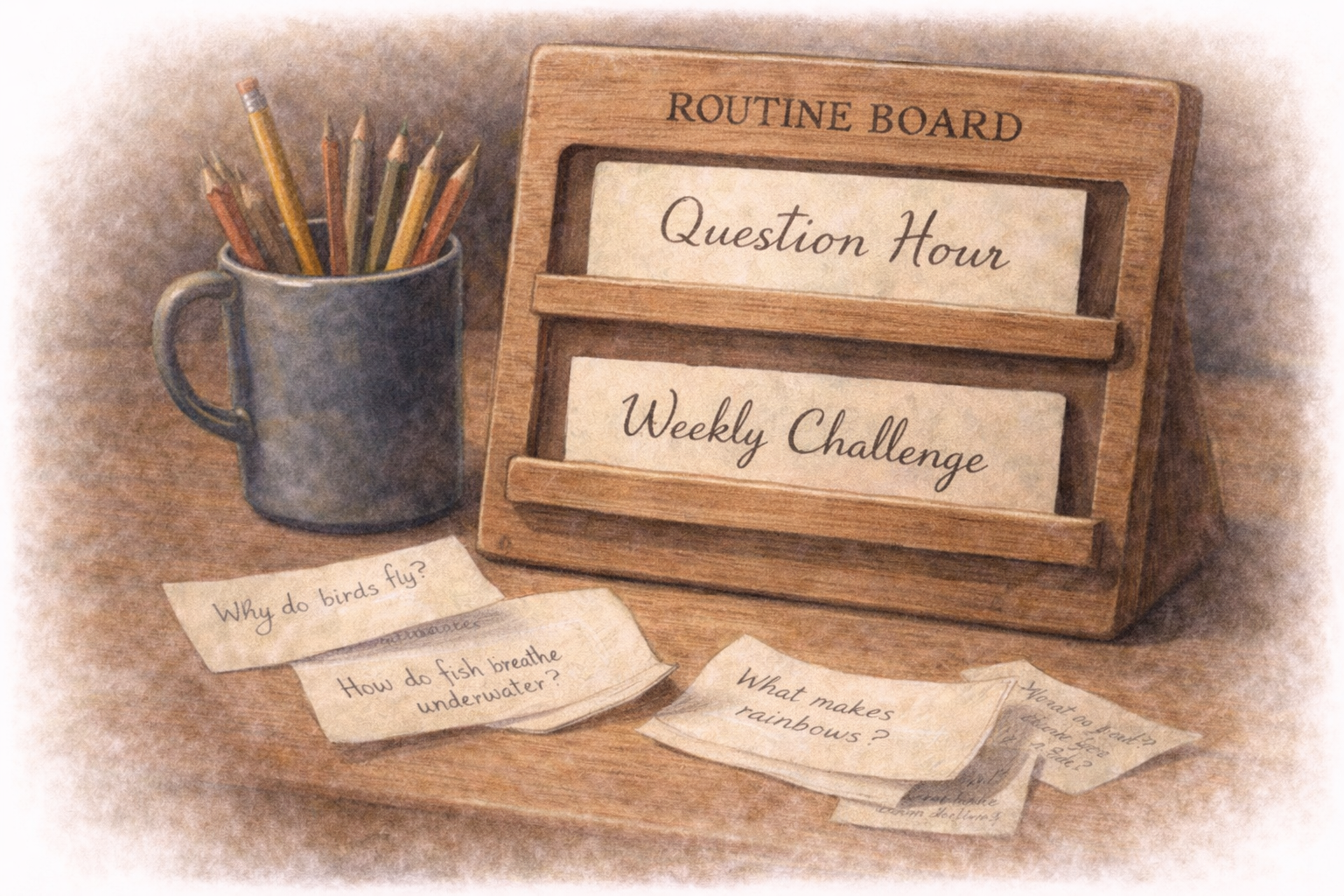
Discover the daily, repeatable methods like "question hour" and "weekly challenges" that nurture creativity and innovation.
The Traits of Innovators
Learn about curiosity, keen observation, out-of-the-box thinking, advocacy, belief, and collaborative competition as traits of innovators.
About Sarah's Diary
This short novel will take an average reader approximately 103 minutes to read. Reflection question response time will depend on the depth of your responses. We invite you to spend a year living with Hiram and Mable Malcomb and their eight children. The year is 1889 and the place is Pocahontas County, West Virginia. As you live with the Malcomb family through the diary of one of the children and the memoirs of the father, you will discover how an innovation mindset is developed. What the Malcombs were doing in the late 19th Century is even more relevant today in the 21st Century. Innovation is essential for society to progress. But how do we nurture innovation as a human talent available to all of us? The Malcombs offer a realistic pathway for developing innovation mindsets. As you live a year with them, we think you will discover that innovation is not the product of genius, but the way we think about our lives and how we can enrich the lives of others.
Testimonials
Sarah’s diary is an eye opening piece that left me not only inspired but motivated. The stories left me thinking for days at a time and taught me to utilize myself to observe the world around me. Not only does this piece generate amazing insights about past innovators, but great advice for future innovators. It’s a piece that will change your life if you allow it to.

I had the privilege of being one of the first students to learn from Sarah’s Diary. I found it to be a wonderfully insightful learning experience focused on innovation and personal growth that exercised my social IQ. Even as an engineering student, I realized my understanding of what it meant to be innovative was misguided. I had mistaken innovation for inventiveness. I learned that being innovative does not require inventing a flashy new product or reinventing the wheel. Instead, innovation can present itself in many forms and is unique to each person. It is about thinking outside the box, challenging the status quo, and adapting to your circumstances. This holds true whether on a farm in the 1800s or on a newly built factory floor in 2026. I especially appreciated how the course pushed me to think differently and reevaluate my perspective on innovation, as well as how I can learn from people who see the world differently than I do. I apply what I learned from this course every day as a leader today.
I thought the Sarah's Diary story was a great opportunity to reflect on where the spirit of innovation can originate, and how that spirit can be cultivated through many different experiences and intellectual exercises. It was interesting to learn how a variety of character traits can influence innovation, and showed that anyone can become an innovator, regardless of age, background, or experience. Overall, the story was very insightful, and has since encouraged me to be more intentional about finding better ways to create, think, and solve problems in my everyday life.
Sarah’s diary is an eye opening piece that left me not only inspired but motivated. The stories left me thinking for days at a time and taught me to utilize myself to observe the world around me. Not only does this piece generate amazing insights about past innovators, but great advice for future innovators. It’s a piece that will change your life if you allow it to.
I thought the Sarah's Diary story was a great opportunity to reflect on where the spirit of innovation can originate, and how that spirit can be cultivated through many different experiences and intellectual exercises. It was interesting to learn how a variety of character traits can influence innovation, and showed that anyone can become an innovator, regardless of age, background, or experience. Overall, the story was very insightful, and has since encouraged me to be more intentional about finding better ways to create, think, and solve problems in my everyday life.
I had the privilege of being one of the first students to learn from Sarah’s Diary. I found it to be a wonderfully insightful learning experience focused on innovation and personal growth that exercised my social IQ. Even as an engineering student, I realized my understanding of what it meant to be innovative was misguided. I had mistaken innovation for inventiveness. I learned that being innovative does not require inventing a flashy new product or reinventing the wheel. Instead, innovation can present itself in many forms and is unique to each person. It is about thinking outside the box, challenging the status quo, and adapting to your circumstances. This holds true whether on a farm in the 1800s or on a newly built factory floor in 2026. I especially appreciated how the course pushed me to think differently and reevaluate my perspective on innovation, as well as how I can learn from people who see the world differently than I do. I apply what I learned from this course every day as a leader today.
Table of Contents
-
1
Welcome
-
(Included in full purchase)
Getting Started
-
(Included in full purchase)
-
2
Introductions
-
(Included in full purchase)
Introduction of Jenny Parton
-
(Included in full purchase)
Introduction of Sarah’s Diary
-
(Included in full purchase)
January 12, 1889 - Sarah’s Diary
-
(Included in full purchase)
Sarah's Siblings
-
(Included in full purchase)
Reflection 1
-
(Included in full purchase)
-
3
Raising the Malcomb Family
-
(Included in full purchase)
January 18, 1889 - Sarah's Diary
-
(Included in full purchase)
Ben's Story
-
(Included in full purchase)
January 20, 1889 - Sarah's Diary
-
(Included in full purchase)
January 25, 1889 - Sarah's Diary
-
(Included in full purchase)
Reflection 2
-
(Included in full purchase)
-
4
The Innovation Process
-
(Included in full purchase)
February 1, 1889 - Sarah's Diary
-
(Included in full purchase)
Jenny Shares Bessie Blount’s Story
-
(Included in full purchase)
February 15 & 22, 1889 - Sarah's Diary
-
(Included in full purchase)
Jenny Shares Barbara McClintock’s Story
-
(Included in full purchase)
March 1, 1889 - Sarah's Diary
-
(Included in full purchase)
Jenny Shares Henry Dunant’s Story
-
(Included in full purchase)
April 8, 1889 - Sarah's Diary
-
(Included in full purchase)
Jenny Shares Michelangelo’s Story
-
(Included in full purchase)
Reflection 3
-
(Included in full purchase)
-
5
Traits of Innovators
-
(Included in full purchase)
March 3 & April 8, 1889 - Sarah's Diary
-
(Included in full purchase)
Jenny Introduces the 5 Questions
-
(Included in full purchase)
May 10, 1889 - Sarah's Diary & Student Rankings for Ben
-
(Included in full purchase)
May 15, 1889 - Sarah's Diary & Student Rankings for Elizabeth
-
(Included in full purchase)
May 30 & June 3, 1889 - Sarah's Diary & Student Rankings for Mary
-
(Included in full purchase)
June 8, 1889 - Sarah's Diary & Student Rankings for Harriett
-
(Included in full purchase)
June 2, 1889 - Sarah's Diary & Student Rankings for Luke
-
(Included in full purchase)
September 1, 1889 - Sarah's Diary & Student Rankings for Jacob
-
(Included in full purchase)
September 15, 1889 - Sarah's Diary & Student Rankings for Matthew
-
(Included in full purchase)
Jenny Shares Gordon Parks' Story
-
(Included in full purchase)
Jenny’s New Assessment Table of the Siblings
-
(Included in full purchase)
Reflection 4
-
(Included in full purchase)
-
6
Updates & Impacts
-
(Included in full purchase)
The Last Entries From Sarah's Diary
-
(Included in full purchase)
Updates on Elizabeth
-
(Included in full purchase)
Updates on Mary
-
(Included in full purchase)
Updates on Jacob
-
(Included in full purchase)
Updates on Luke
-
(Included in full purchase)
Updates on Harriett
-
(Included in full purchase)
Updates on Ben
-
(Included in full purchase)
Updates on Matthew
-
(Included in full purchase)
Updates on Sarah
-
(Included in full purchase)
Ranking Siblings’ Innovation Impacts
-
(Included in full purchase)
Final
-
(Included in full purchase)
Image Credits
-
(Included in full purchase)
About the Creator
Jack Byrd, Jr. Rather than present my background in a traditional academic format, I would like to share my career journey, since that is what this course is about. I came to West Virginia University (WVU) from Fairmont, WV. My first memory as a child was being told by my parents that I needed to do well in school because I would be going to WVU. I chose engineering as a major because I liked math. I have never been a social person, and the thought of giving presentations was very frightening. I didn’t want a career where I would be asked to do presentations. I had an internship with Eastman Kodak. The plant employed more people than lived in my hometown (22,000). I loved the work but was disappointed by how little of an impact my work had at this massive site. I decided to continue in school to get my Master’s, largely because our basketball team was going to be great. After finishing my Master’s, I decided to continue on to get a PhD. I never gave much thought to my career decisions. A turning point in my life was when a classmate of mine lost his father unexpectedly. He asked me to take his classes. Although I had a real fear of public speaking, I agreed. I found out that I loved teaching. I was given an opportunity to stay at WVU when I graduated with my PhD, and accepted. I’ve always been very creative, so developing research proposals was something that was easy for me. I was awarded one of NSF’s top awards for young scholars. When I presented my work at a research conference, I had another career epiphany. I just couldn’t imagine a career where the scope of my work was limited to a ballroom of people. Early in my career, I was awarded the first Faculty Merit Foundation honor of being the best college professor in the state. This gave me some freedom to focus my career on teaching. Now in my 7th decade of teaching, I believe I have taught more students at WVU than any other professor. In April of 2019, I found out that I had cancer. Originally, I thought I could resume classes after a summer of treatment, but the treatment was too challenging. Reluctantly, I had to retire. But I couldn’t stop teaching. I taught online classes during the one year of treatment. When my surgeon came to see me the morning after a six-hour surgery, I was grading papers. I told him, “I love what I do.” He just shook his head. I hope that you will find an equally satisfying career and that this course will give you the ability to find your own purpose as I have done.
Ready to Embrace Innovation?
Read Sarah's Diary and embark on a journey of creative transformation!